
NTC vs. Thermocouple: Which Temperature Sensor Should You Choose?
Dec 12, 2025If you're just starting to learn about temperature sensing, the two terms you’ll hear most often are NTC thermistors and thermocouples. Both measure temperature, both are widely used in appliances and industrial systems—but they work differently and are meant for different jobs. Here’s a clear, beginner-friendly explanation to help you choose the right one.
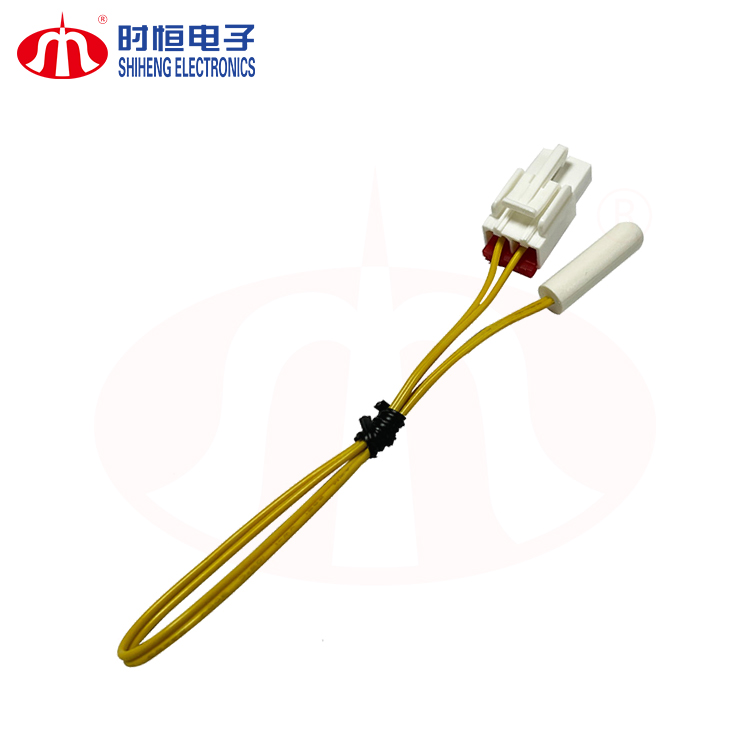
1.What Is an NTC Thermistor?
An NTC (Negative Temperature Coefficient) thermistor is a small ceramic resistor whose resistance drops as temperature rises. It’s one of the most common temperature-sensing components because it’s:
Most NTC thermistors work best from –40°C to around 150°C, which is perfect for home appliances, HVAC systems, EV batteries, motors, chargers, and consumer electronics.
2.What Is a Thermocouple?
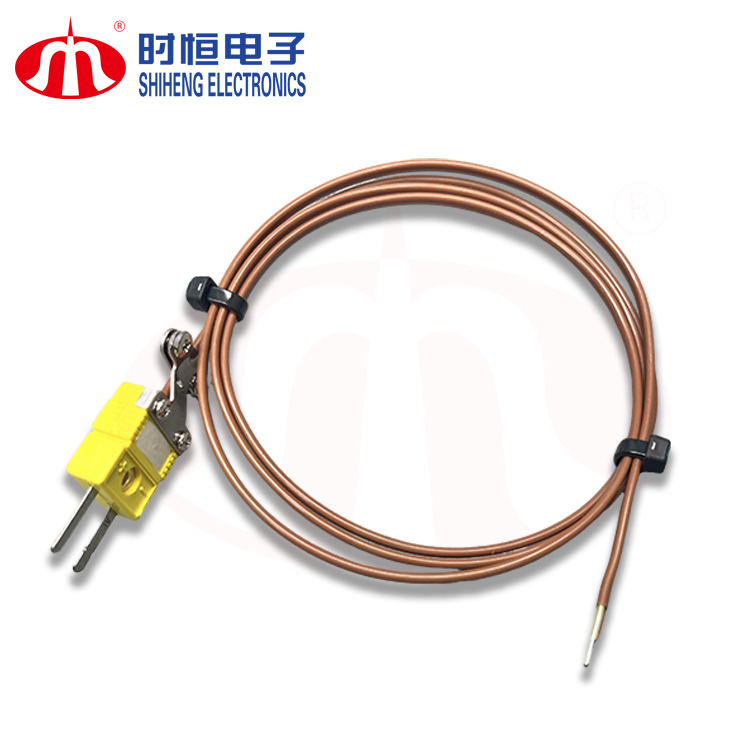
A thermocouple is made from two different metal wires welded together. When the junction heats up, it creates a tiny voltage that corresponds to temperature. Thermocouples are known for their ability to handle:
They are commonly used in furnaces, gas heaters, ovens, engines, and metal processing equipment—places where temperatures easily exceed 300°C and can reach over 1,000°C.
3.Key Differences at a Glance.
|
Feature |
NTC Thermistor |
Thermocouple |
|
Accuracy |
High |
Moderate |
|
Temp Range |
–40°C to ~150°C |
–200°C to 1200°C |
|
Response Time |
Fast |
Moderate |
|
Electronics Needed |
Simple |
Needs amplifier & compensation |
|
Cost |
Low |
Medium |
|
Suit For |
Home/consumer/EV/HVAC |
High-heat industrial systems |
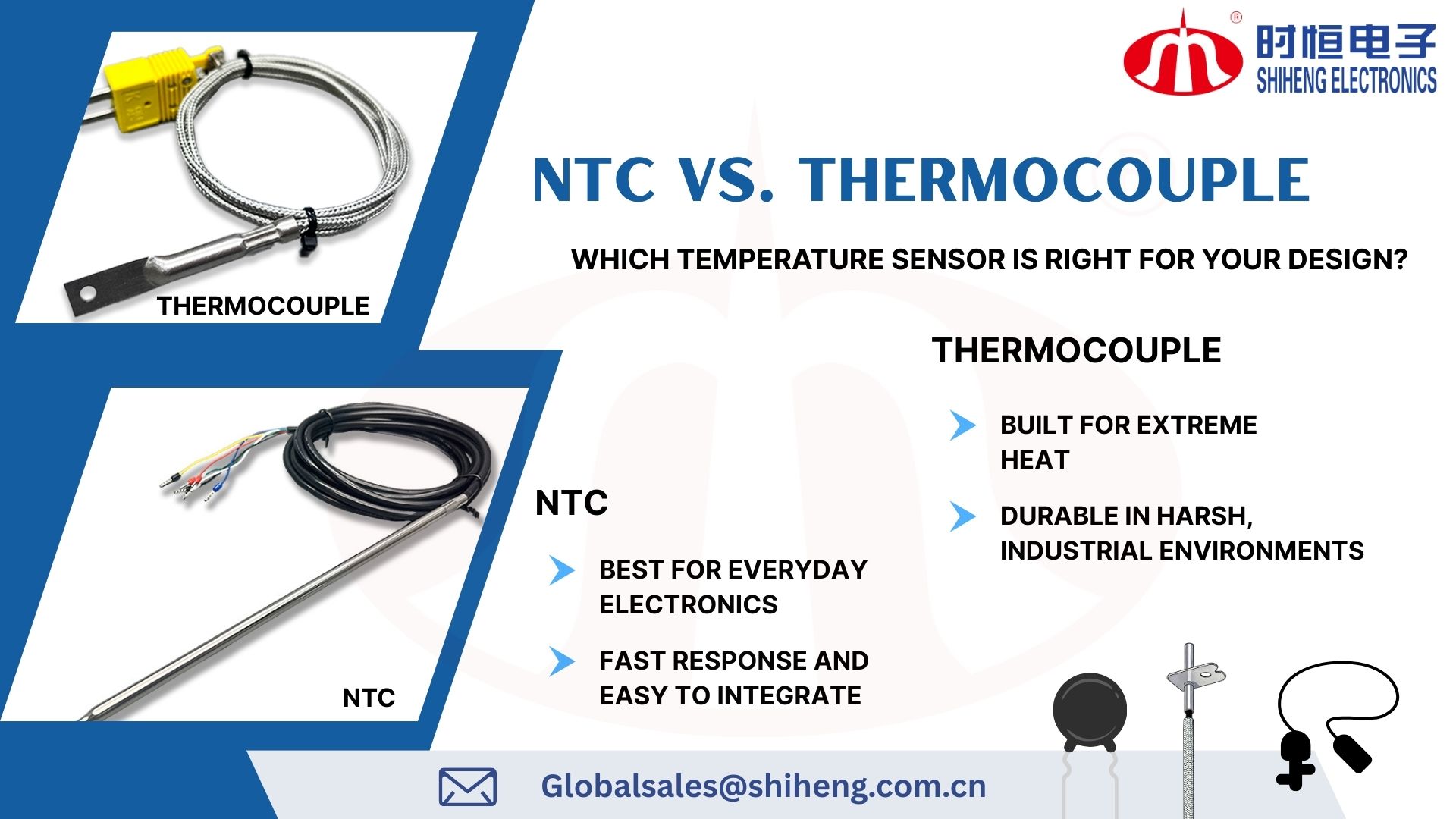
4.Which One Should You Choose?
✔ Choose an NTC thermistor if you need:
For most everyday engineering applications, the NTC thermistor is the easier and better choice.
✔ Choose a thermocouple if you need:
5. The Quick Way to Choose.
Both NTC thermistors and thermocouples are essential temperature sensors, but they’re built for different environments. Understanding each one’s strengths will help you design a safer, more reliable, and more efficient product—whether you’re building a coffee maker or a high-temperature industrial furnace.
Tel : +8615150650428
Email : Globalsales@shiheng.com.cn
WhatsApp Asia : +86 15150650428
WhatsApp America : +86 15190476914
WhatsApp Europe : +86 15190478070
No. 18, Jinyang Road, Hushu Street, Jiangning District, Nanjing City, Jiangsu Province


© 2025 Nanjing Shiheng Electronics Co., Ltd.